
Why Is Etendue Important? The Hidden Key To Unlocking Optical Throughput
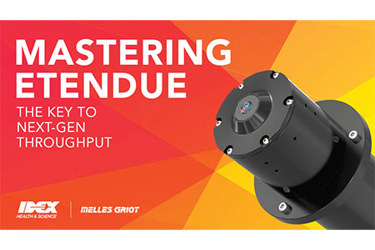
Adding more laser power or upgrading to a faster camera doesn't always improve optical system performance. The limiting factor is often etendue—a fundamental optical property that determines how efficiently light can be transferred through an imaging system. Because etendue cannot be increased, system performance depends on how well the illumination source, optics, and sensor are matched.
This article explains the role of etendue in modern optical design and why optimizing the entire optical train is essential for maximizing throughput. It explores how mismatches between imaging optics, detectors, and illumination waste photons, reduce image uniformity, and create bottlenecks that limit speed and efficiency.
Real-world performance comparisons demonstrate the impact of etendue optimization. A custom high-etendue objective can deliver more than six times the throughput of a conventional off-the-shelf objective, while optimized line-scan imaging dramatically reduces acquisition times compared to traditional step-and-shoot methods.
The article also highlights the Melles Griot XPLAN™ CCG Lens Series as an example of an etendue-matched optical solution. Designed to maximize usable field of view, maintain diffraction-limited performance across the image, and pair with high-power laser illumination, these lenses help eliminate common optical constraints while supporting faster, higher-quality imaging.
Beyond individual components, the discussion emphasizes the value of system-level engineering. By aligning every element of the optical path—from light source to sensor—designers can overcome throughput limitations and build imaging systems capable of meeting the growing performance demands of biotechnology, life sciences, and other advanced optical applications.
Get unlimited access to:




Enter your credentials below to log in. Not yet a member of Photonics Online? Subscribe today.