|
|
|
|
Data center demand for connectivity speed and data volume is likely to be four times its current level by 2030. This requirement places an enormous burden on the interconnects between servers in the data center — components that can number in the hundreds of thousands for even a single data center.
|
|
|
|
|
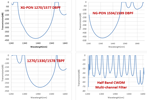
Multi-band filters optimize the balance between price and performance while conserving valuable space. By simplifying system design and reducing complexity, they can match or even improve the performance of single-band filters, offering an efficient solution for applications where size, cost, and performance are critical considerations.
|
|
|
|
|
For telecom OEMs designing devices that feature all new specifications, push the limits of performance, and/or combine functionality in unique ways, close collaboration with a knowledgeable filter supplier is essential to unlock the full range of benefits multi-function filters can provide.
|
|
|
|
|
Depending on the application, tight PPEF may need to be combined with other precise specifications, including modulation depth, insertion loss and error function slope. A primary filter with a precise error function can be implemented into the system and subsequent sets of filters can compensate for that primary filter’s error function.
|
|
|
|
|
Hybrid GFFs save space, simplify system layouts, reduce costs compared with two-filter configurations, and deliver exceptional reliability. By combining multiple filtering functions into a single component, they provide a more efficient, streamlined solution.
|
|
|