
SSRL BL 10-2: Quick-Scanning XAS For Operando Catalysis

By John Oncea, Chief Editor, Clinical Tech Leader
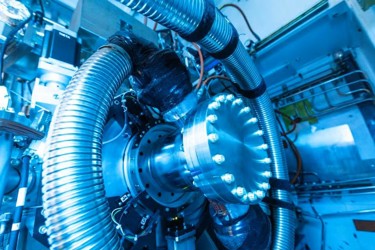
SSRL Beam Line 10-2 delivers 72,000 XAS spectra per hour using a quick-scanning monochromator and high-flux wiggler for operando catalysis and battery research.
Conventional step-scan and continuous-scan X-ray absorption spectroscopy (XAS) monochromators are typically limited to roughly 40 spectra per hour – a cadence that cannot resolve catalytic transformations occurring on timescales of seconds or faster. Beam Line 10-2 at the Stanford Synchrotron Radiation Lightsource (SSRL), which delivered first light in February 2025, closes this gap through a purpose-built quick-scanning XAS (QXAS) architecture capable of compressing a full spectrum into 50 milliseconds – 72,000 spectra per hour.
BL 10-2 is the first beamline at SSRL, a U.S. Department of Energy user facility at SLAC National Accelerator Laboratory, dedicated exclusively to catalysis research and the first quick-scanning XAS instrument deployed at a high-flux wiggler source with full pitch and roll control over the monochromator crystals. The result is a facility optimized not only for photon delivery, but for the tightly controlled environments that operando catalysis experiments demand.
A Dedicated Beamline For Operando Catalysis
The case for a dedicated catalysis beamline extended beyond photon performance. Operando catalysis requires tightly controlled experimental environments – including flammable and toxic gas handling, elevated pressures and temperatures, and inline analytical diagnostics operating in parallel with spectroscopic measurements. For years, the Co-ACCESS team assembled and dismantled this infrastructure across shared beamlines. “Almost all our collaborators wish to study their catalyst while it is working,” said Simon R. Bare, SLAC distinguished staff scientist. “It was as important to have a permanent home so we could focus on providing the correct environment for the sample being studied as it was to have the right photon characteristics.”
At BL 10-2, compressed gas lines are permanently plumbed, inline purifiers are installed, and sample environments remain in place between experiments. This configuration delivers more reproducible reactant streams, reduces setup time, and significantly increases available beam days for catalysis users.
Quick-Scanning Monochromator Design
The quick-scanning monochromator for BL 10-2 was designed and built by Oliver Mueller, Lead Engineer in SSRL’s Chemistry & Catalysis Division. Standard continuous-scan systems rely on gearboxes and stepper motors with optimized motion control; even at their practical limit, these approaches produce full-spectrum scan times of approximately 90 seconds. The BL 10-2 architecture inserts a direct-drive torque servo motor between the goniometer and the in-vacuum Si(111) double-crystal assembly. The goniometer pre-selects the scan center energy, while the servo rocks the crystal pair back and forth through the desired energy range at rates sufficient to complete a full XAS spectrum in 50 milliseconds.
The crystal assembly operates under ultra-high vacuum with liquid-nitrogen cooling, imposing substantial thermal and mechanical demands on the drive system. Eigenfrequency analysis guided the assembly geometry, with resonances shifted away from operating frequencies and counterweights carefully placed to balance all moving components. Mueller characterized the result as “vibration-free mechanics precise to a thousandth of a degree.”
Full Pitch And Roll Control At A Wiggler Source
Previous quick-scanning monochromators have almost universally relied on channel-cut crystals, in which both diffracting surfaces are machined from a single silicon block. While channel-cut designs eliminate relative motion between crystals, they sacrifice pitch control, and consequently, an import mechanism to control harmonic rejection, which is required on broadband high flux wiggler beamlines. BL 10-2 employs two independent crystals with piezo-driven linear actuators mounted directly on the in-vacuum assembly, providing full pitch and roll control while retaining the stability required for quick-scanning operation – making it the first QXAS instrument at a wiggler source to do so.
Space constraints within the optics hutch precluded the installation of a second crystal pair that would have extended the accessible energy range and enabled redundant optical paths – an option identified for future expansion should the hutch footprint be enlarged.
Energy Calibration And Drift Control
Energy calibration is maintained through a triply redundant angular encoder scheme. Two high-resolution in-vacuum encoders positioned near the crystals provide primary Bragg-angle readout, while a third atmospheric-side encoder functions as a fault-tolerant backup. Reference foils positioned downstream of the sample are measured concurrently with every spectrum, enabling continuous, spectrum-resolved energy calibration and providing high sensitivity to optical drift even during long, continuous experiments.
Wiggler Flux And Detector Constraints
Reducing a complete XAS spectrum from 90 seconds to 50 milliseconds decreases the integrated photon count per energy point by approximately a factor of 1,800 – making the high-flux wiggler source that feeds BL 10-2 architecturally essential rather than merely advantageous. “If you are scanning quickly, the X-ray flux has to be sufficient to obtain good signal-to-noise within that time period,” Bare noted. While counting and timing electronics operate comfortably on the 50 ms timescale, the response of ionization chambers to rapidly changing photon energies emerges as a limiting factor at the shortest collection intervals. The BL 10-2 team is iterating on ionization chamber design and characterizing the usable phase space for each detector configuration as commissioning progresses, ensuring that signal-to-noise and spectral fidelity remain comparable to those obtained at traditional scanning speeds.
Data Acquisition And The CatXAS Pipeline
Quick-scanning XAS produces continuous time-series data streams across all detector channels, rather than the discrete per-energy-point records of step-scan XAS. Transforming these streams into analyzable spectra requires a QXAS-specific pipeline that slices increasing- and decreasing-energy half-scans, assigns timestamps, and registers encoder-derived energy axes to each detector signal. This pipeline was developed specifically for BL 10-2 and integrated directly into the beamline control system, with low latency and high reliability as core requirements for experiments that may run continuously for hours or days.
Data volume represents the second major shift. A user accustomed to 40 spectra per hour who transitions to even a modest 200 spectra per hour experiences a fivefold increase in data volume: at 72,000 spectra per hour, the increase spans three orders of magnitude. Adam Hoffman, lead scientist on BL 10-2, began developing the CatXAS Python workflow in 2019 alongside beamline design to address this. CatXAS processes spectra at acquisition rates and incorporates process metadata – temperature, gas composition, pressure, and flow rates – enabling spectra-process correlation within minutes of collection. “The biggest change for a user will be having to think about what processes in their systems change with a time constant on the order of seconds,” Hoffman said. “Most users are used to a spectrum every five to fifteen minutes, so they are essentially blind to dynamics that occur on the seconds scale.” The longer-term roadmap targets on-the-fly pre-processing with optional advanced analyses, including EXAFS modeling and ML-based spectral decomposition. Co-ACCESS supports users through experimental design consultations, hands-on beamline training, post-experiment analysis follow-up, and short courses in advanced methods.
Operando Catalysis And Battery Research Applications
The primary scientific focus of BL 10-2 is operando XAS, enabling direct correlation between catalyst structure and catalytic performance under working conditions. Three classes of experiment benefit most directly from millisecond-scale collection. First, adsorption and desorption dynamics: on prototype systems, the Co-ACCESS team demonstrated that ethylene and CO adsorption/desorption on supported metal catalysts – previously accessible primarily through laboratory FTIR – can be resolved by quick-scanning XAS, providing surface coverage dynamics via X-ray spectroscopy. Second, activation transients: earlier 90-second scans of Rh catalysts during CO2 conversion revealed that rapid Rh reduction and agglomeration drive a selectivity switch from methane to CO, but the formation kinetics were unresolvable; BL 10-2 is designed to capture these processes directly. Third, electrochemical dynamics: cyclic voltammetry and chronoamperometry now fall within the accessible timescale at BL 10-2, enabling synchronized structural and electrochemical measurements not possible at conventional XAS beamlines.
Battery research is a defined secondary application. Fast-charge and fast-discharge cycling induces structural transformations in electrode materials on timescales BL 10-2 can track, while the simultaneous X-ray diffraction station enables correlation of chemical and structural evolution over cycling and long-term degradation. Mueller noted that the QXAS architecture is broadly applicable to any in-situ or operando XAS study requiring high temporal resolution, with other high-flux wiggler beamlines at SSRL and peer facilities representing natural candidates for analogous implementations.
Community Support And User Access
BL 10-2 was constructed over five years on an existing beamline, integrating new optical and motion-control systems with legacy infrastructure. The beamline is operated by Co-ACCESS – the Consortium for Operando and Advanced Catalyst Characterization via Electronic Spectroscopy and Structure – which has expanded SSRL’s catalysis user community from six to more than seventy principal investigators since 2019. Bare is measured in assessing competitive positioning: “There are many wonderful spectroscopy beamlines at synchrotrons around the world. We will certainly be competitive, but I prefer to think about collaborative efforts to push the frontiers for catalysis researchers globally.” Beamtime proposals are reviewed through the standard SSRL process, with Co-ACCESS providing pre-proposal technical guidance and post-experiment analysis support to help users fully exploit the capabilities of Beam Line 10-2.