
SensL To Exhibit At BiOS And Photonics West In San Jose
Cork, Ireland, and Mountain View, CA — SensL, a provider of innovative low light detectors and modules, will be exhibiting at BiOS — the world's largest biomedical optics exhibition and Photonics West — North America's essential photonics exhibition.
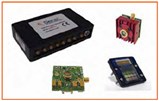
 SensL will present the latest advances in their Silicon Photomultiplier (SPM) product line, including the SPMArray: Position Sensitive, Multi-Anode, Silicon Photomultiplier Array. The SPMArray, an arrayed Silicon Photomultiplier (SPM), is the first solid-state alternative to the analog Multi-Anode PMT and combines the benefits of silicon photodiodes with the performance of PMTs. SensL will be provide a product demonstration of the SPMArray on Wednesday, Jan 23, 2:30 P.M. In addition to their SPM product range, demonstrations will be given on SensL Photon Counting and Timing products.
"We are very excited about our latest product releases," commented Joseph O'Keeffe, Chief Commerical Officer. "Our emerging product portfolio, which combines high performance, size, functionality, and cost is opening up never before seen applications and markets."
An invited talk entitled "Current, emerging, and future detector technologies for low-light sensing" will be given by Dr. Carl Jackson, Chief Technology Officer, on Wednesday, Jan 23, 10:30 A.M.
A poster entitled "Silicon photomultiplier technology comparison" will be presented on Wednesday, Jan 23, 6:00 P.M. (Conference: Silicon Photonics III; Poster No. 6898-48)
SensL's products will be demonstrated on booth 8414 at BiOS and on booth 6345 at Photonics West.
About SensL
SensL provides a range of solid-state low light sensing, photon counting, and imaging products. SensL's Silicon Photomultiplier (SPM) is an excellent alternative to glass PMT detectors. SensL's products are ideal for applications such as homeland security, bio-diagnostics, medical analysis, radiation detection, cell imaging, LIDAR, and environmental monitoring. For more information about our complete product range, see www.SensL.com.
SOURCE: SensL