
Ocean Optics Adds Scientific-Grade Spectrometer With Enhanced VIS-NIR Response
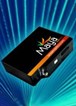
High-sensitivity spectrometer is ideal for wide range of VIS-NIR applications
The Maya2000 Pro-VIS-NIR from Ocean Optics is a back-thinned 2D FFT-CCD spectrometer with high sensitivity, 80% peak quantum efficiency and excellent VIS-NIR response. The Maya2000 Pro-VIS-NIR is ideal for low light-level applications such as Raman, as well as for analysis of gases used in semiconductor processing and measurement of biological samples in the life sciences.
The Maya2000 Pro-VIS-NIR has a low-etalon, scientific-grade detector that provides high quantum efficiency from ~400-1100 nm. Other features include triggering functions for providing accurate timing and synchronization between the spectrometer and other devices.
Three low-jitter trigger modes and normal (free-running spectral acquisition) operating modes are possible. Applications include pulsing a light source when acquiring a spectra and synchronizing spectral acquisition to coordinate with samples moving through a process stream or sensors reaching a certain temperature level.
In addition, Maya2000 Pro-VIS-NIR supports RS-232 communications and has a 30-pin connector and 10 user-programmable digital I/Os. Its enhanced onboard programmable high-speed FPGA controller enables triggering and provides other performance advantages. For more information, visit www.oceanoptics.com.
About Ocean Optics
Headquartered in Dunedin, Fla., Ocean Optics is a leading supplier of solutions for optical sensing – fundamental methods of measuring and interpreting the interaction of light with matter. With locations in Asia and Europe, the company has sold more than 180,000 spectrometers worldwide since 1992. Ocean Optics' extensive line of complementary technologies includes chemical sensors, analytical instrumentation, optical fibers, metrology products and optics. The company is a subsidiary of Halma p.l.c., an international market leader in safety, health and sensor technology.
SOURCE: Ocean Optics