
NOVA GEO™ PIC Waveguide & Array Polishing System For Photonic Integrated Circuits
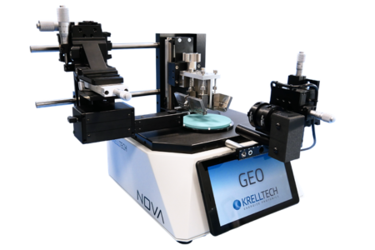
NOVA GEO™ is a programmable polisher with manual mode and inline inspection to confirm material removal and endface geometry on PICs, waveguides, and arrays.
The NOVA GEO™ PIC Waveguide & Array Polishing System is KrellTech’s premier solution for the evolving demands of the silicon photonics and integrated optics industries. This flexible processing platform is specifically configured for the ultra-precise polishing of Photonic Integrated Circuits (PICs), planar lightwave circuits, and fiber arrays. Its highly adaptable component mounting plate is designed to secure a wide variety of edge widths and thicknesses, ensuring stable and repeatable processing for even the most delicate optical chips. The system allows for endface angles to be varied from 0 to 50 degrees, utilizing either manual or automated workholder stages to achieve the exact specifications required for high-performance optical coupling.
A critical advantage of the NOVA GEO™ is its integration of real-time monitoring and inspection capabilities. Optional video inspection systems allow operators to monitor the polishing process in real-time and inspect the polished surface directly within the GEO™ environment. This in-line viewing capability is essential for minimizing material handling, which reduces the risk of component damage and contamination. By confirming endface geometry and surface quality before removing the component from the machine, laboratories and production facilities can significantly improve yields and streamline their quality assurance workflows.
Beyond standard waveguide processing, the NOVA GEO™ architecture is built to support complex R&D projects and specialized production runs that require micron-level accuracy. Whether the application involves high-density fiber arrays for data centers or specialized PLCs for sensing and quantum computing, the GEO™ provides the necessary precision and flexibility. Its combination of robust hardware, adjustable geometry controls, and advanced inspection options makes it an indispensable tool for organizations pushing the boundaries of photonic integration.