
NEW Dual Wavelength Excitation Light Source For Life Science Applications
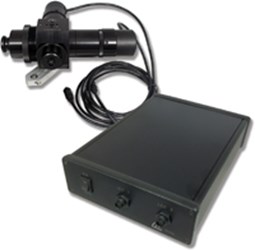
The new IS-LEDc from Siskiyou Corporation is a turnkey, flexible and easy to use dual wavelength excitation light source for optongenetics and other life science applications. Specifically, the IS-LEDc optics module combines the output from two LEDs, and focuses this light into a single SMA fiber optic connector.
The IS-LEDc controller provides a simple software and USB interface to enable full digital and independently addressable control of each LED, including external triggering from TTL input. The IS-LEDc is available with a choice of any two LEDs from a comprehensive range of visible and near infrared center wavelengths, including 460 nm, 525 nm, 590 nm, 735 nm and 850 nm. LED nominal power output is 5 watts at each wavelength, with other powers available on a custom basis.
The IS-LEDc is ideal for both end users and OEMs in a growing number of applications – from optogenetics stimulation to widefield microscopy and fluorescence imaging of microwell arrays – that need the ability to independently pulse two different excitation wavelengths, with no time lag or shift in illumination alignment. The majority of these also need fiber delivery of the light sources. The IS-LEDc greatly simplifies the task of fiber delivery because it is permanently aligned at the factory to eliminate all the well-known challenges faced when attempting to couple LED output into a fiber, and particularly when combining two LEDs into a single fiber. The output of the IS-LEDc can then be coupled into standard format upright microscopes using SMA connectorized fiber and Siskiyou’s CBH-1.0 microscope beamsplitter module. Alternately, the output can be focused into other applications using the company’s MRK100 imaging system.
Source: Siskiyou Corporation