|
|
|
|
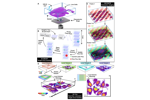
Quantum biosensing must operate at biologically relevant temperatures, where complex environments flood sensors with noise and competing signals. Preserving quantum coherence while isolating meaningful biological data is a central challenge, demanding advanced techniques to distinguish true measurements from background interference and environmental disturbances.
|
|
|
|
|
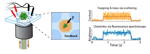
The ISABEL trap is an instrument that deploys interferometric scattering as a highly sensitive, fluorophore-label-free detection scheme. This technique allows for the controlled study of individual particles, enabling researchers to study properties like cargo loading and physical assembly applied to applications like drug delivery.
|
|
|
|
|
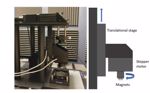
Magnetic tweezers are transformative tools in single molecule microscopy, allowing precise application of force and torque to observe molecular responses. Let's delve into their capabilities, focusing on their application in Prof. Maria Mills’ groundbreaking DNA research at the University of Missouri.
|
|
|
|
|
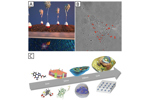
A team of Duke University researchers sought to explore the viral infection process before the virus has bonded to tissue, understanding how viruses navigate the epithelial space, through mucus and the periciliary layer. To do so, they needed a microscope capable of observing that journey in a tissue culture model that closely replicates the lungs.
|
|
|
|
|
|
|