
Choosing The Right Materials For Mico-Molded Optics And Photonics Components
Brett Saddoris, Technical Marketing Manager, Accumold
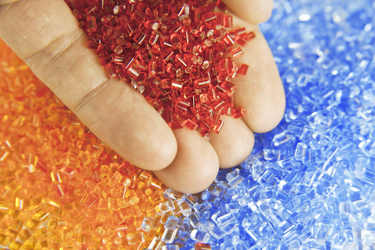
At SPIE Photonics West, one recurring question stood out: what materials can actually be used for optical and photonics micro molding? In high-performance optical systems, material choice is never secondary. It often determines whether a design performs reliably in real-world conditions or fails under environmental, thermal, or dimensional stress.
Photonics applications impose unique demands. Designers must evaluate optical transmission at specific wavelengths, birefringence, haze, scattering, thermal expansion, moisture absorption, chemical resistance, and long-term dimensional stability. When micro molding is involved, those considerations intensify. A polymer that looks ideal on a data sheet may behave very differently when filling micro-scale features or holding micron-level tolerances.
Common optical-grade polymers such as COC/COP, PMMA, and polycarbonate each offer distinct trade-offs in clarity, stability, and durability. Engineered thermoplastics like LCP, PEI (Ultem), and PEEK are often selected for precision alignment structures where stiffness and thermal performance outweigh transparency. The correct choice depends on wavelength, environmental exposure, mechanical function, and risk tolerance.
Equally important is manufacturing control. Micro molding introduces challenges in flow behavior, stress management, surface replication, and warpage control. Without disciplined process control and metrology, even the right material can compromise optical intent.
The key takeaway: material selection in photonics is a system-level decision. Success depends not just on resin availability, but on the expertise to mold, measure, and protect performance at micro scale.
Get unlimited access to:




Enter your credentials below to log in. Not yet a member of Photonics Online? Subscribe today.