
Biophotonics Offers New Hope For Cardiovascular Disease Patients

By John Oncea, Chief Editor, Clinical Tech Leader
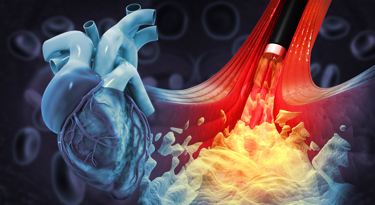
Biophotonics merges light technology with biology to transform cardiovascular care through advanced imaging, photobiomodulation therapy, and precise interventions.
Cardiovascular disease (CVD) – everything from aortic disease to heart failure to valve disease – is the leading cause of death in the U.S. According to the Cleveland Clinic, nearly half of U.S. adults have some form of cardiovascular disease, and one in three women dies from it.
CVD affects the heart and blood vessels of people of all ages, sexes, ethnicities, and socioeconomic levels, and, without appropriate treatment, can lead to heart attacks or strokes. Earlier diagnosis can help with effective treatment plans, which vary depending on symptoms and type of disease, including lifestyle changes, medications, procedures or surgeries, cardiac rehabilitation, and active surveillance.
Biophotonics technologies are now offering innovative ways to treat CVD, both diagnostically and therapeutically. This includes high-resolution imaging like Optical Coherence Tomography (OCT) and photoacoustic imaging, as well as emerging therapies like light-emitting diode photobiomodulation and optogenetics.
Cardiovascular Disease: America’s Leading Killer
Heart disease is the leading cause of death for men, women, and people of most racial and ethnic groups in the United States, with one person dying every 34 seconds from cardiovascular disease, according to the National Center for Biotechnology Information (NCBI). In 2023, 919,032 people died from cardiovascular disease, representing the equivalent of one in every three deaths.
Heart and blood vessel disease, also called heart disease, includes numerous problems, many of which are related to atherosclerosis, which develops when a substance called plaque builds up in the walls of the arteries. Atherosclerotic cardiovascular disease, otherwise known as ASCVD, is caused by plaque buildup in arterial walls and refers to conditions that include coronary heart disease, such as myocardial infarction and angina, cerebrovascular disease, such as transient ischemic attack and ischemic stroke, peripheral artery disease, such as claudication, and aortic atherosclerotic disease.
The term “heart disease” refers to several types of heart conditions, with the most common type in the United States being coronary artery disease, which affects the blood flow to the heart, according to NCBI. High blood pressure, high blood cholesterol, and smoking are key risk factors for heart disease, with about half of people in the United States having at least one of these three risk factors.
The statistics are sobering. In the United States, someone has a heart attack every 40 seconds, with about 805,000 people having a heart attack annually, of which 605,000 are a first heart attack. About one in five heart attacks is silent; the damage is done, but the person is not aware of it.
Heart disease cost about $417.9 billion from 2020 to 2021, including the cost of healthcare services, medicines, and lost productivity due to death NCBI. Common types of cardiovascular disease include coronary heart disease, stroke, hypertension, and congestive heart failure, along with other forms such as atrial and ventricular arrhythmias, congenital cardiovascular disorders, rheumatic heart disease, and peripheral artery disease.
Understanding Biophotonics: The Intersection Of Light And Life
Biophotonics represents the interdisciplinary fusion of light-based technologies with biology and medicine, rapidly transforming research, diagnostics, and therapy across various domains. The term denotes a combination of biology and photonics, with photonics being the science and technology of the generation, manipulation, and detection of photons, quantum units of light.
At its core, biophotonics is a multidisciplinary scientific field that combines light-based technology, particularly with biological materials and biomedical applications, using innovative and transformative light-based technologies for understanding and manipulating biological systems at the molecular, subcellular, cellular, tissue, and organ levels in a non-invasive manner. The field involves the interaction between electromagnetic radiation and biological materials, including tissues, cells, sub-cellular structures, and molecules in living organisms.
The NIH has recognized biophotonics’ importance, establishing specialized research units. The NIBIB Section on Biophotonics develops probes and techniques for use in diffraction-limited and sub-diffraction-limited fluorescence imaging of cells and tissues, with major emphasis placed on developing new and improving existing genetically encoded fluorescent proteins for use as markers and sensors Similarly, the National Institute on Alcohol Abuse and Alcoholism’s Laboratory of Biophotonics and Quantum Biology develops advanced imaging and spectroscopy techniques for studying protein-protein interaction under physiological conditions and for developing second-generation biosensors.
With its ability to probe at the atomic, molecular, cellular, tissue, and organ levels, the interaction of light with the nervous system has allowed new directions in brain research. The Center for Biophotonics Science and Technology, the only center in the country funded by the National Science Foundation and devoted to the study of light and radiant energy in biology and medicine, focuses on research expected to have a significant impact on current biomedical science and technology, according to NCBI.
Biophotonics Emerges As Promising Therapy For Cardiovascular Disease
Cardiovascular disease accounts for approximately 30% of deaths worldwide, estimated at 18-20 million people annually, representing one of humanity’s most pressing health challenges. As traditional treatment options struggle to address the recovery phase following heart attacks and strokes, an unexpected therapeutic approach is gaining momentum: harnessing light itself to heal damaged cardiac tissue.
Photobiomodulation – a therapeutic technique using low-power light in the visible to near-infrared spectrum – has emerged as a groundbreaking intervention for cardiovascular conditions. In the context of cardiovascular diseases, PBM’s benefits include improved circulation, reduced oxidative stress, and tissue regeneration, making it particularly valuable for patients who resist conventional treatments.
The science behind photobiomodulation centers on how specific wavelengths interact with cellular structures. Red and near infrared light at wavelengths between 630-650 nanometers serves as the primary therapeutic light source, with cells absorbing these photons through mitochondria to trigger beneficial biological cascades. Recent research has focused on pharmacological strategies that enhance PBM’s effects, including combinations with antioxidants that neutralize reactive oxygen species and protect against oxidative stress.
Clinical Evidence And Applications
Biophotonic techniques such as optical coherence tomography (OCT) and photoacoustic imaging can provide non-invasive, high-resolution imaging of blood vessels and tissues, facilitating early detection of conditions like arteriosclerosis. Beyond diagnostics, biophotonics plays a pivotal role in guiding cardiovascular and catheter-based minimally invasive surgeries, enabling surgeons to accurately visualize blood flow and vessel morphology in real time for precise stent placement.
Recent clinical studies demonstrate tangible results. A case series involving ten advanced heart failure patients who received fifteen sessions of transcutaneous and intravenous photobiomodulation therapy showed significant improvements in the six-minute walk test, suggesting enhanced functional capacity. Animal studies have shown reductions in total infarct size up to 76%, along with decreases in inflammation and scarring.
Research has demonstrated that PBM treatments promote cardioprotective effects, including improved cell viability following ischemia-perfusion injury, functional cardiovascular recovery after myocardial infarction, and promotion of angiogenesis. The therapy appears to work through multiple molecular pathways, modulating inflammatory cytokines and oxidative stress factors.
Therapeutic Possibilities
Light-based cardiovascular interventions now include myocardial ablation, laser revascularization, and photodynamic therapy, according to NCBI. Photodynamic therapy for atherosclerosis using compounds like indocyanine green has shown promise in treating inflamed atherosclerotic plaques.
Perhaps most remarkably, researchers have developed an innovative photosynthetic system where light, rather than blood flow, fuels cardiomyocytes through intramyocardial delivery of cyanobacteria, yielding durable improvements in cardiac function during ischemia, according to NCBI.
While challenges remain regarding standardization and large-scale clinical validation, photobiomodulation represents a change in thinking in cardiac care, offering hope that light therapy may one day complement or enhance traditional interventions for millions suffering from cardiovascular disease worldwide.