
INDUSTRY INSIGHTS

Discover how a novel non-contact metrology method, TWI, leverages a 6-axis motion system, revolutionizing aspheric optics qualification for speed and precision.


- What Are Channel Skip Filters?
- Exploring The Emerging Applications Of Optical Interconnects
- Fostering Innovation: The Keys To Success
- A Fit-For-Purpose Velocimeter Optimizes Press Processing
- How We Partner – Our Product Development Process
- Illumination Solutions: Deliver Light Where You Want It, How You Want It
- Filter Spectra At Non-Normal Angles Of Incidence
- Semrock Filters Don't Burn Out
- Performance, Reliability, Repeatability
LATEST HEADLINES
- A Novel Universal Light-Based Technique To Control Valley Polarization In Bulk Materials
- Ansys And TSMC Enable A Multiphysics Platform For Optics And Photonics, Addressing Needs Of AI, HPC Silicon Systems
- Kopin Exhibiting At SPIE Defense & Commercial Sensing Conference At The National Harbor, MD April 23 Through April 25, 2024
- QCi Secures Order For Revolutionary Underwater LiDAR Prototype
- Perfecting The View On A Crystal’s Imperfection
FEATURED SOLUTIONS
-
 Precision XY Saw Cutting Of Glass, Wafers And Filters
Precision XY Saw Cutting offers high-volume, small-part fabrication with tight tolerances, ideal for optical components requiring precise dimensions and low defects.
-
 Remarkable Measurement Angular Stability With This Laser Power Meter
The IS12L-9S-RSI-INT-D0 is an integrating sphere detector designed for laser power measurement up to 9 W. It has fast response time, high average power capabilities, and a resistant coating.
-
 Laser Beam Profiling Camera For Large Beams: BEAMAGE-4M-FOCUS
Adding a lens in front of your profiler, calculating the magnification factor, double-checking the alignment, and dealing with ghost beams… sounds familiar? Try the BEAMAGE-4M-FOCUS instead.
-
 6-Axis Miniature Hexapod: H-811.I2
The H-811.I2 6-Axis Miniature Hexapod is a fast, compact, and highly precise positioning system, ideal for industrial and research applications such as micromanufacturing and medical technology.
-
 High-Power Joulemeter For Laser Energy Measurement Up To 1 kW
The IS50A-1KW-RMT is the highest-power joulemeter on the market, offering laser energy measurement up to 1 kW average power.




FEATURED VIDEOS
-
 Inside Our Precision Optical Solutions
Explore PG&O's precision optical fabrication services: scribing, cutting, machining, grinding, polishing, coating, and more. High-quality, cost-effective solutions tailored to your needs.
-
 Solving the First Light Capture Problem in Photonics Alignment
PILightning tackles the first light capture issue in photonics alignment, promising dramatic improvements in testing and assembling photonic circuits, revolutionizing the industry.
-
 Abrisa Technologies - Your Total Solution Partner
Take an inside look at Abrisa Technologies' unwavering commitment to long-term partnerships, stability, and technical excellence with an approach that brings innovation and reliability together.


FEATURED WEBINARS
-
 Measuring My Laser…Where Do I Start?
Ophir invites you to join us for a Webinar on the topic, "Measuring my Laser…Where do I start?" We will cover the basics – and just the basics.
-
 Unlocking The Future Of Low-SWaP Thermal Imaging: Design Challenges And Performance
This presentation discusses the performance and design challenges of advanced folded optics and lightweight zoom lenses optimized for next generation IR thermal imaging systems and applications.
-
 Unleashing The Power Of Photonics – A Digital Tech Talk Event
PI hosts a new tech-talk live streaming event on the topic of “Unleashing the Power of Photonics”, with speakers from EPIC, CITC, MPI Corporation, Transcelestial, and PI.


FROM THE EDITOR
RECENT NEWSLETTERS
- 04.24.24 -- A Look At The Bright Future Of Quantum Sensing | Nanopositioning Automation For The Quantum Era
- 04.22.24 -- The Optics That Drive UAVs | Lenses For Security Applications | Applications Of High Speed SWIR Imaging
- 04.17.24 -- Lasers And Machine Vision | Laser Calculators | Metrology In Production Environments
- 04.15.24 -- EOs And The Military | Measuring Laser Output | Thin Film Optical Coatings | Hexapod FAQs
- 04.11.24 -- End-to-End Optical Solutions From 0.2 µm To 15 µm
SPECIAL FEATURE
Ultra-Compact Laser Power Meter For High Power Industrial Lasers In Confined Spaces: Ophir® Ariel
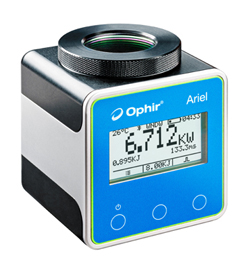
Ophir offers the new Ophir® Ariel, a self-contained, ultra-compact laser power meter for measuring high-power industrial lasers up to 8KW. Read more.
READERS' CHOICE

EDITOR'S CHOICE

SUPPLIER OF THE MONTH

Zygo Corporation is a global leader in the design and manufacture of advanced optical metrology systems and ultra-precise optical components and assemblies. Our mission is to enable customer success by delivering innovative precision optical and metrology solutions that exceed expectations. Learn More