
Anti-Reflective (AR) Glass & Coatings
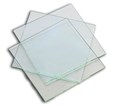
Anti-reflective (AR) glass is created by bonding specially selected materials to the surface(s) of the glass. While uncoated glass has a surface reflectivity of approximately 4% per surface, (AR) glass will have a reflection value less than uncoated, ranging down to 0.1% in some cases.
These coatings are all dielectric, single or multi-layers, and are designed for low reflectance and high transmittance in the UV, visible, and near IR spectral bands. AR coatings meet the requirements of MIL-C-675C, MIL-C-14806A, and MIL-C-48497A. AR Coatings are often crucial components in optical systems with multiple lenses or other optics where the maximum possible light energy is needed. AR coatings help to produce brighter images while reducing the intensity of ghost images which may otherwise be produced in optical systems having multiple reflecting surfaces.
Additional Product Features Include:
- High transmission
- Low reflectance
- Operating temperature of ≥ 300°C (typical)
- Durable and easy-to-clean
Download the available datasheet to learn more.